
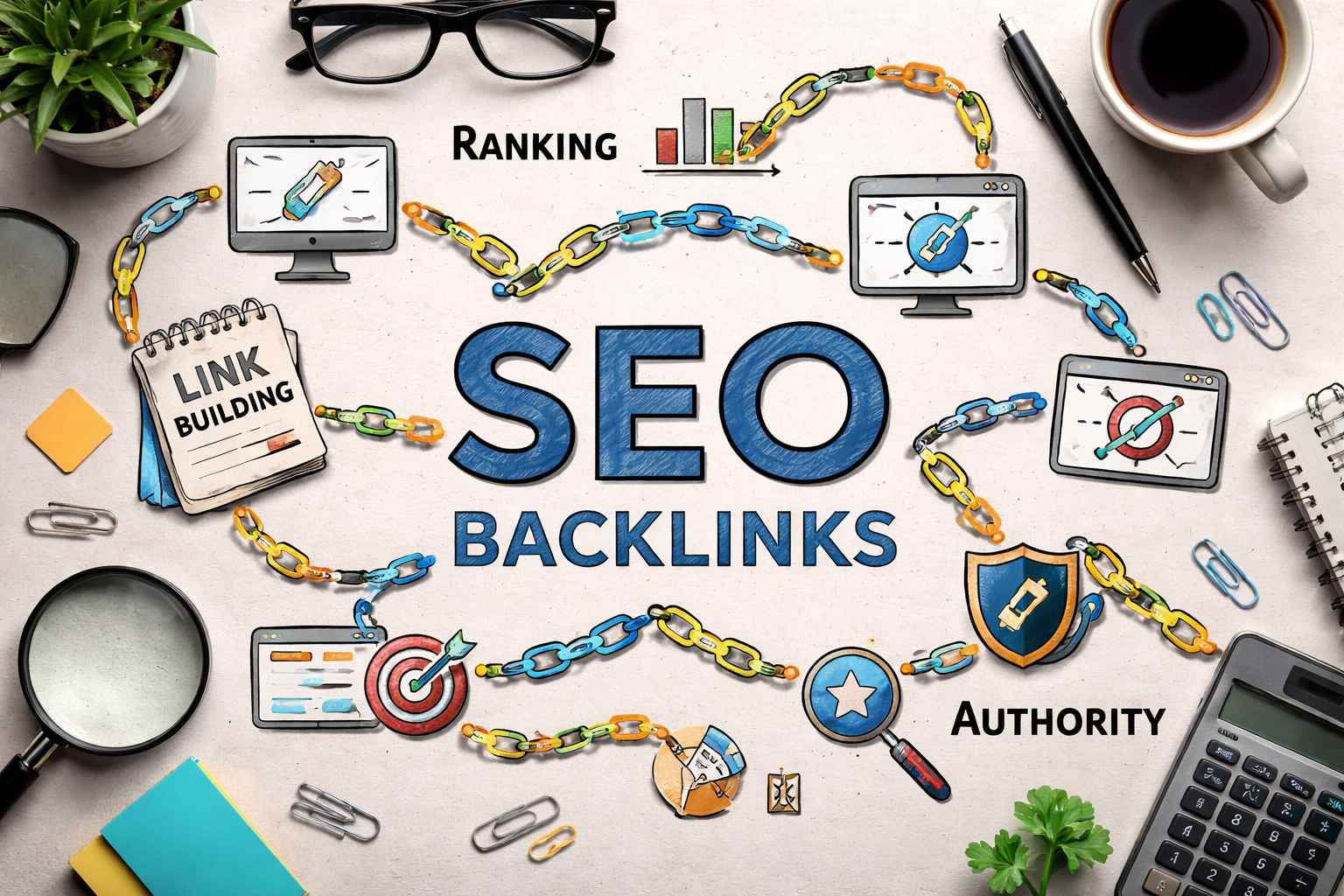
Buying backlinks has been one of the most debated topics in SEO for over a decade. Despite Google’s public stance against paid links, the reality is that backlinks remain one of the strongest ranking factors in search engines.
The difference between success and disaster is not whether you buy backlinks — it’s whether you buy the right ones.
High-quality backlinks can dramatically increase your search visibility, authority, and rankings. Low-quality ones can do the opposite.
This guide explains how to buy backlinksproperly in 2026, what metrics matter, and how to evaluate whether a link is actually worth the money.
Backlinks remain the backbone of search engine ranking algorithms. Even with AI search, entity-based SEO, and semantic indexing, links still function as authority signals.
When a trusted website links to your content, it signals that your page is credible and valuable.
Buying backlinks has become common because:
However, the biggest mistake people make is buying links without evaluating the quality of the site first.

Not all backlinks are created equal. A single high-quality link can outperform dozens of weak ones.
Here are the key factors to evaluate before buying a backlink.
Metrics like Domain Rating (DR) from Ahrefs or Domain Authority (DA) from Moz are widely used to estimate the strength of a website.
Generally speaking:
When buying backlinks, most SEO professionals aim for DR40+ websites with real traffic.
However, DR alone is not enough. Many spam networks inflate these metrics.
Traffic is one of the most reliable indicators of link quality.
A site with genuine search traffic shows that:
Before buying a link, check tools like:
Ideally the site should have at least 1,000+ monthly organic visitors.
Sites with 3,000–10,000+ monthly traffic are usually strong editorial placements.
Relevance has become increasingly important in Google’s algorithm.
For example:
Google evaluates link context and topical authority.
When buying backlinks, prioritize sites that are:
Topical relevance strengthens the authority signal and reduces risk.
The placement of the backlink inside the article matters.
The strongest backlinks are:
Weak backlinks include:
A good backlink should look like it was naturally added by the editor.
Always check what other sites the website links to.
If a website links to:
…it may be part of a link farm or PBN network.
Tools like Ahrefs can show you outgoing link patterns.
High-quality sites usually link to:
If the website publishes low-quality content, the backlinks may not help rankings.
Red flags include:
High-quality backlink sites usually have:
Remember: Google evaluates the entire page, not just the link.
Before buying a backlink, check if the website is indexed properly.
Search Google:
site:domain.com
If only a few pages appear or the site is barely indexed, it may have been penalized.
Also check if the site ranks for keywords.
A domain with hundreds or thousands of indexed pages is a safer investment.
Buying too many backlinks too quickly can trigger algorithmic suspicion.
A natural link profile typically grows gradually.
Instead of purchasing hundreds of links at once, a safer strategy is:
This creates a natural-looking link profile.
Different types of backlinks have different strengths.
Guest posts involve publishing an article on another website that contains your backlink.
Benefits:
These are among the most common backlinks purchased.
Niche edits place your link inside an existing article that already ranks in Google.
Advantages:
These can be powerful when inserted into aged, ranking content.
Digital PR placements come from media publications.
Examples include:
These links can dramatically boost authority but are often expensive.
Avoid backlinks from sites that show these characteristics:
If a backlink seems too cheap, it usually is.
Prices vary depending on the authority of the website.
Typical ranges:
Major publications can cost significantly more.
Paying more for fewer high-quality backlinks is usually the better strategy.
Rather than purchasing random placements, a better approach is to build a structured link profile:
This layered approach helps create a natural authority footprint in search engines.
Buying backlinks remains one of the fastest ways to improve search rankings when done correctly.
The key is quality over quantity.
Before buying any backlinks, always evaluate:
If a link checks all these boxes, it can become a powerful asset in your SEO strategy.
But if it fails these tests, it may not be worth the risk.
In SEO, the difference between ranking and wasting money often comes down to knowing how to evaluate a backlink before you buy it.