











































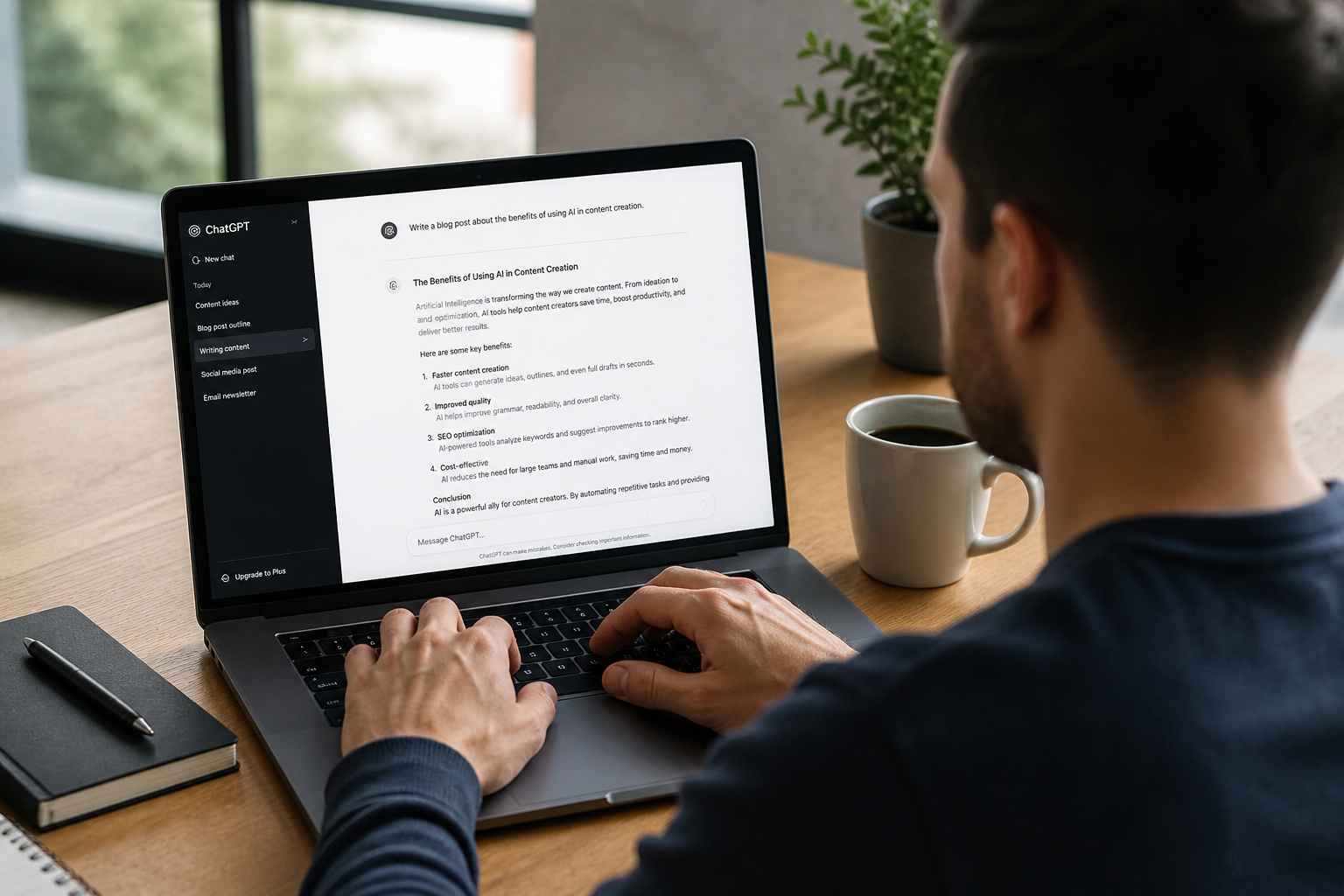
There is a question I hear constantly from business owners in Abbotsford, Chilliwack, Mission, and across the Fraser Valley. Can I use AI to write my website content? Will Google penalize me for it? Is it safe to use tools like ChatGPT for my blog posts and service pages? The anxiety around this topic is completely understandable, given how much conflicting information is circulating online about AI content and Google penalties in 2026.
The short answer is that Google does not care how your content is created. It cares about the quality of the content itself. But the full answer is considerably more nuanced than that, and getting the nuance wrong could genuinely cost you rankings and visibility in the Fraser Valley market. The March 2026 core update reinforced something Google has been saying consistently.
They are not running an AI content detector to find and penalize AI-written pages. Their systems evaluate content based on helpfulness, accuracy, depth of expertise, and genuine value to the reader. Content that meets those standards ranks well regardless of how it was produced.
Google’s own documentation states that their systems reward original, high-quality content that demonstrates E-E-A-T qualities, however the content is produced. The emphasis is on quality. AI is a tool. Like any tool, its value depends entirely on how skillfully you use it and what unique value you add to the raw output.
The Real Problem With AI Content for Fraser Valley Businesses
 The issue is not that AI-generated content is inherently bad or that Google has some secret detection algorithm. The real issue is that most AI content, when published without significant human editing and enrichment, is painfully generic. It lacks specificity. It lacks local knowledge. It lacks the kind of firsthand experience and genuine expertise that Google is increasingly rewarding in its ranking systems.
When a Fraser Valley roofing company uses ChatGPT to write a service page and publishes the output without substantial editing, they end up with content that reads identically to every other roofing page on the internet. It says the same things in the same way with no local specifics about the Fraser Valley climate, no genuine trade expertise about materials suited to BC weather patterns, no photos of actual completed projects in Abbotsford or Chilliwack, and no personality that distinguishes the business from thousands of faceless competitors online.
That is what Google pushes down in rankings. Not because an AI wrote it, but because it is indistinguishable from thousands of other pages covering the same topic with the same generic information. Google’s documentation refers to this as scaled content that primarily exists to manipulate search rankings rather than to genuinely help users. The method of content creation is irrelevant to Google. The absence of unique value is what triggers the ranking decline.
How Fraser Valley Businesses Can Use AI Content Safely
Use AI as a Starting Point, Never as the Final Product
AI is excellent at creating first drafts, outlines, and structural frameworks for your content. Use it to get your ideas organized, your headings laid out, and your foundational information in place. Then do the critical work that AI simply cannot do on its own. Add your personal knowledge of the Fraser Valley market gained from years of working here. Include specific details about projects you have actually completed in Abbotsford, Chilliwack, or Mission. Insert your own professional opinions and recommendations based on hands on experience. Replace generic claims with specific, provable, locally relevant statements that only someone working in the Fraser Valley could make.
Add Genuine Local Information That No AI Can Know
An AI tool trained on general internet data cannot know that the heavy clay soil common in parts of Abbotsford makes certain types of foundation work significantly more challenging and expensive than in other regions. It does not know that the persistent winter rain patterns in the Fraser Valley create specific roofing material considerations that differ dramatically from drier interior climates. It has no idea which local suppliers offer the best materials pricing or which municipal inspectors are particularly thorough about certain code requirements.
This hyperlocal, experience-based information is what makes your content genuinely unique and valuable. No competitor can replicate it because it comes from your specific years of working in the Fraser Valley. And Google rewards this authentic firsthand knowledge more heavily than ever.
Include Real Author Information
Google’s E-E-A-T guidelines place significant weight on content from identifiable experts with verifiable credentials. If your content has a real author bio with a professional photo, work history, relevant certifications, and links to legitimate profiles, it sends a much stronger quality signal than anonymous content. This is true regardless of whether AI assisted in drafting.
Always Review for Factual Accuracy
AI tools regularly produce incorrect information. They hallucinate statistics, invent citations, and present outdated information as current fact. Review every factual claim carefully. Inaccurate information on your website damages both your rankings and your professional reputation in the tight-knit Fraser Valley community, where trust is everything.
The Bottom Line
AI is a powerful productivity tool that can make content creation faster for Fraser Valley businesses with limited marketing resources. But it is only a starting point. The businesses that succeed use AI for the routine structural parts while adding genuine local expertise, real project experience, specific examples, and an authentic personality that no AI can replicate. Think of AI as a capable assistant, not a replacement for your knowledge of the Fraser Valley market.
For content strategies tailored for the Fraser Valley, visit our Abbotsford SEO services.
Start with our free SEO audit to see how your content performs.
For our full approach, visit our SEO services page.