

When personalization moved from campaigns to platforms, great things happened. Personalization used to mean campaign logic. Now it means cloud architecture.
Once, marketers embedded rules inside journeys. In 2026, personalization isn’t where you message. It’s where you model.
Data volumes are exploding. Customer identity is splintering across devices, sessions, and domains. And real-time isn’t a differentiator anymore. It’s the baseline.
Still, many brands personalize from:
But leaders? They personalize from:
Salesforce Marketing Cloud agencies don’t lead 2026 personalization because they write better copy.
They lead because they operationalize the Data Cloud, turning it into the thinking brain behind every marketing moment.
But the traditional personalization ways won’t cut it anymore.
Why? Let’s cut to the chase and learn how a Salesforce Marketing Cloud agency leads the personalization trends in 2026.
Table of Contents
| Why traditional personalization models are breaking downWhat the Data Cloud actually changes in personalizationWhy Salesforce Data Cloud reshapes the personalization stackWhy Salesforce Marketing Cloud agencies lead this transformationThe new personalization architecture agencies are deployingUse cases defining data cloud–driven personalization trendsMeasurement in a data cloud personalization worldRisks and governance in data cloud personalizationHow to choose a Salesforce Marketing Cloud agency for Data Cloud personalizationWrapping up |
Most personalization strategies today still think in channels:
But your customer isn’t channel-first. They’re context-first. And context doesn’t live in silos.
When each channel holds its own profile:
The result? A customer who feels like a stranger on every screen.
Meanwhile, personalization engines rely on:
Behavior shifts mid-session, but segments update tomorrow. Decisions lag behind behavior.
The problem isn’t your creativity. It’s your architecture.
Great personalization doesn’t begin with messaging. It begins with data that knows what matters, before the message is even triggered.
Now, let’s discuss what Data Cloud brings to the table in terms of personalization.
The Data Cloud doesn’t add another database. It changes the personalization game entirely.
From profiles to customer graphs
Profiles are static records. Graphs are living systems.
With identity resolution and cross-domain stitching, brands can unify fragmented views into a single person-level understanding.
From batch data to real-time state
Every event. Every scroll. Every click. Captured. Interpreted. Acted on, instantly.
Streaming events and in-session updates move decision-making from after-the-fact to in-the-moment.
From channel activation to enterprise activation
Personalization isn’t just for marketers anymore.
A Data Cloud turns personalization from a campaign feature into an enterprise capability.
Now, let’s discuss why SFMC is leading the way for the new personalization strategies.
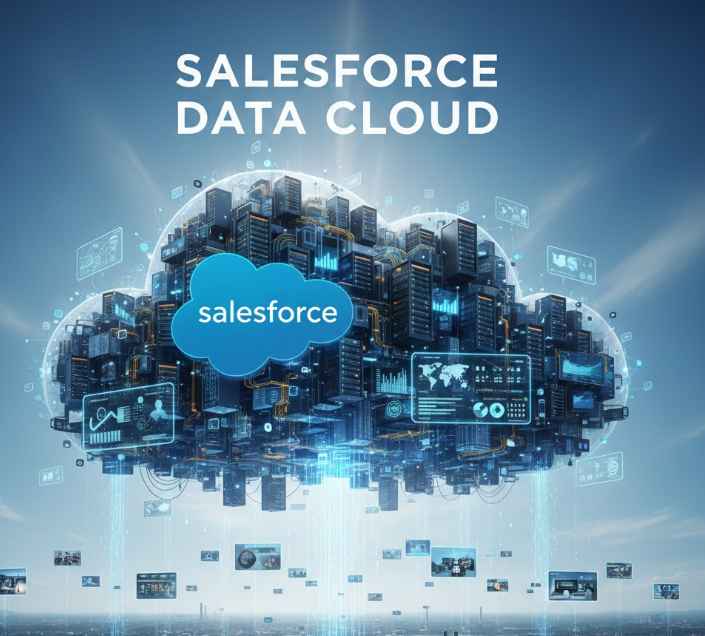
Salesforce isn’t just layering on data. It’s re-engineering the stack from the inside out.
Positioning?
Salesforce Data Cloud isn’t just a repository. It’s becoming the operating system for personalization, in every moment, across every team, with every signal.
Because they see the real issue.
It’s not your journeys. It’s not your creation. It’s your system architecture.
The best agencies have moved on from:
And stepped into roles as:
In-house teams often struggle here. Why?
Leading agencies solve for the system first, then the message.
Let’s see how the SFMC agencies build the architecture of personalization techniques.
What does next-gen personalization look like behind the curtain?
1. Identity & unification layer
2. Real-time segmentation layer
3. Decision & activation layer
4. Feedback & learning layer
It’s not one engine. It’s an ecosystem. And agencies build the blueprints.
Let’s make it tangible.
Real-time lifecycle personalization
Journeys are no longer prebuilt flows. They shape-shift in session, based on live behavior, not last week’s logic.
Cross-channel continuity
The same customer receives the right message, in the right place, without repeat or conflict, no matter how they engage.
Predictive personalization
Systems detect churn risk before it’s obvious. Offers are triggered by propensities, not abandonments.
Service and marketing convergence
Support signals (e.g., negative CSAT, returns, refunds) now inform marketing tone, timing, and targeting. A refund isn’t just a transaction. It’s a retention signal.
But it’s crucial to measure the success of your efforts so that you can line up your resources.
Traditional reporting says:
Data Cloud asks:
New KPIs:
Campaign attribution evolves.
From “last-click wins” to “which system made the most meaningful decision?”
Measurement becomes multi-layered:
It’s no longer about who opened. It’s about which decision lifted revenue, and how quickly it adapted.
But not everything comes easy. Every new venture poses some threats and challenges. Let’s tackle them.
More power, more complexity.
Without proper oversight, Data Cloud deployments can drift fast.
Risks include:
Governance is not a checkbox. It’s a competitive advantage.
Brands that win in 2026 will have:
The difference between a high-performing system and a legal nightmare?
Governance maturity.
Now, let’s head to the process of finding the right SFMC partner to help you through the testing waters.
Certifications won’t tell you what matters.
Look beyond journey design and demand architectural thinking.
Ask about:
Here are a few key questions to ask agencies:
Also, here are the red flags you should be aware of:
If the agency can’t show you how they supervise AI decisions, they shouldn’t be making them.
That brings us to the business end of this article, where it’s fair to say that the future of personalization belongs to the architects of data, not messages.
Revisit the real shift:
The creative is still important, but only when it arrives at the right time, in the right place, with the right context.
And context doesn’t live in subject lines. It lives in systems.
The ball is in your yard. Make every effort count.