



























Digital marketing is an evolving field, and small businesses need to keep up with the trends to grow exceptionally. With every year, the changing trends and technology make online marketing more sophisticated, and small businesses need to optimize accordingly to thrive in the market. So, let’s dive in and know about the trends that’ll help you grow your sales.
- Artificial Intelligence
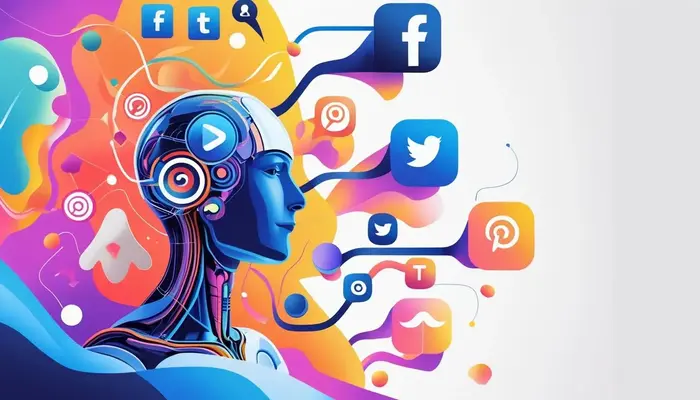
AI is growing every day, and it’s being added to various industries to optimize the process. Whether it’s corporates or government organizations, nothing is untouched by AI.
AI is being significantly used in the digital marketing industry for understanding customer behavior, search trends, and data analysis. Chatbots are one example of marketing AI.
Mastercard produced a Facebook Message bot that employs natural language processing algorithms to figure out what the consumer wants and answers as if it were a real person, automating even the most difficult requests. This improves the customer experience and facilitates conversions.
- Instagram Reputation Marketing
Customer reviews are used in reputation marketing to promote your company’s reputation in unique ways across several media.
Sharing success stories in the form of screenshots of client evaluations or photographs of completed work accompanied by a review goes a long way.
Using Instagram to advertise your business online is a great method to get new leads and increase sales.
This is because around 80% of Instagram users utilize the platform to assist them in making purchase selections from local companies.
Social proofs are a real help for users. Customer reviews are used as evidence of your company’s reputation in social proof, a sort of reputation marketing.
As a result, employing Instagram for social proof reviews helps to generate new leads by raising brand recognition. It also confirms the decisions of potential buyers as they get closer to the moment of sale.
- Marketing Automation
It’s challenging to develop a message that conveys your company’s numerous layers in only a few words; it’s much more difficult to maintain your marketing materials consistent and dependable. This is where marketing automation enters the picture.
While email service providers make it simple to distribute digital content, there are now many possibilities for using more sophisticated automated marketing tools. With top-notch SEO and customer-focused message, you can now customize and automate every part of your email marketing to have the largest potential effect. In the same way, you can use the automation tools for other tasks as well, which are feasible and efficient for your business.
- Micro-Influencer Marketing
So you can’t afford to employ a million-follower celebrity influencer? That’s OK. In fact, micro-influencers are used by more than 56% of companies that spend on influencer marketing.
Micro-influencers are people who advocate brands on social media but have a limited following. Despite having fewer followers, their postings are typically more impactful owing to higher levels of engagement.
These influencers, too, have established a specialty in their field, which is why they’ve begun to play a larger part in converting leads, interacting with audiences, and increasing brand recognition.
- Short Content
Short-form content is the second most effective trend presently being used by marketers.
More than 31% of worldwide marketers are investing in short-form video content, with 46% believing the approach is beneficial in terms of performance and engagement. And, by 2025, 89% of worldwide marketers expect to maintain or expand their investment in it.
Short-form videos not only need less bandwidth to produce, but they also fit nicely with the fast-paced attention spans of internet viewers of all demographics. This is most likely why TikTok, Reels, and, in prior years, Snapchat, have seen rapid development and marketing attention.
- Evergreen Voice Search
By 2025, voice searches will account for half of all searches, and this trend is expected to continue. Voice-activated speakers are utilized as a part of 72% of people’s everyday routines.
Voice search is becoming increasingly important in providing individuals with all of the information they require. Many businesses have already included voice search into their digital marketing plans. This focuses on content strategy and SEO efforts in particular.
- Mobile Optimization
It’s estimated that we check the phone every 12 minutes or so! Isn’t it evident that optimizing your website for mobile makes sense?
Customers have come to anticipate the ability to explore and buy in minutes from brands and companies, so it makes it reasonable to include it in your marketing plan.
Begin by making sure your website is up to date and engaging. However, for those people that read their email on the go, you may move on to topics like email optimization.
- Personalization
Although artificial intelligence and programming will be a new Marketing trend, the truth is that brand customization will always be the most important factor.
You must tailor your marketing this year if you want to stand out. This includes personalized content or blog posts, goods, emails, and other forms of communication.
According to statistics, 63 percent of customers are extremely annoyed by generic advertising blitzes. Increase your sales by personalizing your content and providing a genuine experience.
EasyJet has launched a data-driven email campaign that analyses customers’ trip histories with the airline to build personalized experiences that then advise where they might like to fly next. Nearly 12.5 million unique emails were sent, with a click-through rate of 25% higher than emails without any personalization.
Starbucks is another effective example, which employs a gamified mobile app that is as customized as possible by relying on data such as purchase history and location. Customers may customize their beverages using the app, and its rewards system encourages them to use it more often, bringing in $ 2.56 billion in sales.
- Social Commerce
Social commerce, the integration of e-commerce and social media, has seen significant growth in recent years. In 2023, global social commerce sales were estimated at $1.298 billion, with projections reaching nearly $3 trillion by 2026.

- Local Services Ads
Several key trends are set to shape the Google Ads landscape:
- AI-Powered Automation: Google Ads is increasingly leveraging artificial intelligence to enhance campaign management. Features like Performance Max campaigns utilize AI to optimize ad placements across various Google networks, aiming to maximize conversions and reach the right audience.
- Video Ads Dominance: With the surge in video consumption, particularly on platforms like YouTube, video ads are becoming central to advertising strategies. Innovations such as YouTube Shorts Ads and interactive video formats are gaining traction, offering brands new avenues to engage users effectively.
- Privacy-First Advertising: In response to stricter data privacy regulations, Google Ads is adapting by emphasizing first-party data utilization and developing privacy-centric ad solutions. This shift ensures compliance while maintaining effective ad targeting capabilities.
- Diversification of Ad Spend: Advertisers are increasingly allocating budgets across multiple platforms, moving beyond traditional channels like Google Ads. This diversification aims to maximize reach and minimize risks associated with over-reliance on a single advertising medium.
- Enhanced Ad Personalization: Advancements in AI are enabling more personalized ad experiences. By analyzing user behavior and preferences, Google Ads can deliver highly relevant ads, improving user engagement and conversion rates.
Although a Google Business Profile isn’t required to qualify for Local Services Ads, it’s a good idea to have both and connect them.
That’s because your Google Business customer reviews may be used as Google Local Services reviews, and your advertising won’t rank highly unless you have a lot of them.
- First-Party Data
With the depreciation of third-party cookie data due to the global concern about consumer privacy, implementing first-party data will necessitate a certain level of expertise. All data obtained from a user’s actual visit to a website is referred to as first-party data. Data from product purchases, customer service interactions, social media, and other sources can be manually input or saved. When first-party data is used, a marketing approach switches from prospecting to creating stronger connections with current and potential consumers. It necessitates an omnichannel strategy that prioritizes different methods for different channels.
There are marketing trends that every small business owner should consider to nurture and grow their sales. All these small business marketing trends are studied and recommended by industry experts, and you must work on these to stay ahead of your competitors.
Good luck!