What exactly does a facebook marketing service do, and how can a small business pick one without drowning in jargon or high-priced proposals? If you run a local business, you need targeted traffic, measurable leads, and a predictable way to spend ad dollars that actually moves the needle. A facebook marketing service should make those outcomes possible even when you have a limited budget and one person handling daily operations.
In this guide you’ll get a plain-language overview of core services, a practical 6-point vetting checklist you can use on a call, realistic pricing and a sample 30/60/90 KPI plan. By the end you’ll have the exact questions to ask a vendor and red flags to watch for when evaluating facebook marketing for small business.
✓ Quick Answer
A Facebook marketing service plans and runs targeted ad campaigns, creates social creatives, installs tracking (Pixel), and optimizes performance to drive leads, sales, or awareness. To choose one, compare goals, reporting cadence, onboarding steps, pricing transparency, and proven KPI targets using a short decision checklist.
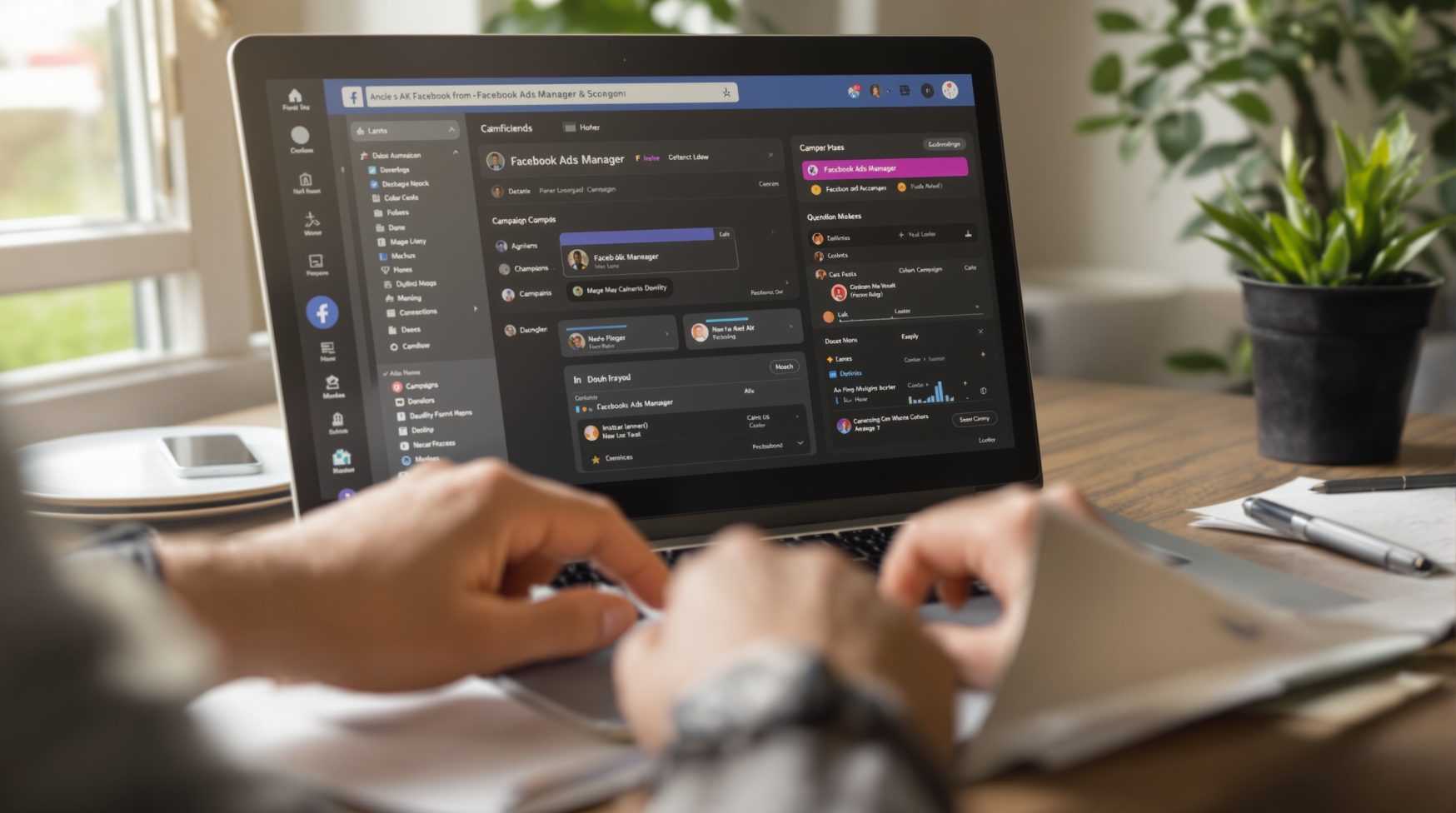
A reliable facebook marketing service covers setup, creative production, targeting, campaign management, and reporting. For a local restaurant, that means: install the Meta Pixel on your booking page, create a campaign structure for reservations, and produce a set of creatives for Feed and Reels that match your menu and season. And for a plumbing service, it means building lead forms and setting up call tracking so phone leads are recorded.
Concrete deliverables you should expect: a documented account structure (1 campaign, 2–4 ad sets per goal), 4–8 creatives and caption variations, Pixel and conversion events installed, and a regular report showing impressions, CPA, and conversion rate. If you want deeper organic help, ask about ongoing page management or a cross-channel approach that includes Social Media Marketing support.
Good providers map campaign structure to your business goal: leads, purchases, or awareness. Expect Business Manager setup or access, Pixel installation, and a plan for conversion events like “Contact Submitted” or “Purchase.” Delivery: a one-page onboarding doc, Pixel verification screenshot, and a 30-day plan for tests and audiences.
Deliverables should include static images, short video clips for Reels and Stories, and multiple caption versions for A/B tests. A practical example: for a product launch, expect 6 creatives (3 video, 3 image) plus suggested primary text and CTAs. Ask if they provide basic on-brand editing or if you must supply finished assets.
Expect custom audiences from your email list or site visitors, plus lookalike audiences for scaling. For local businesses, precise geographic and interest targeting matters more than big lookalikes. The provider should document audience sizes and how they plan to expand or narrow them during the first 60 days.
A reliable cadence is weekly checks during the learning phase and a concise report every two weeks or monthly showing CPA, conversion rate, and creative performance. Ask for example reports; good ones show outcomes, not just impressions. For integration tips on measurement, see the Google Search Central resources on tagging and verification.
📌 Key takeaway: Every small business should receive tracking setup, a documented campaign structure, and regular performance reports tied to the stated goal.

Use this six-step checklist on vendor calls. Ask each question and listen for specific, measurable answers. If a provider gives vague promises instead of numbers and timelines, that’s a warning sign. Below is an ordered checklist you can copy into an email or ask live.
💡 Pro tip: Ask for a one-week sample audit or a free account review to see how they think about your account before committing to a contract.
Below is a compact, copyable checklist table with the exact questions to ask and clear red flags. Read each row on your call and mark provider responses as Good / Questionable / Red flag.
| Checklist Step | What to Ask the Provider | Red Flag / What to Avoid |
|---|---|---|
| Goals & Budget | “What KPI will you target with a $X monthly ad budget? Show expected CPA or lead volume for 30/60/90 days.” | Vague answers like “we’ll get you more sales” without numbers. |
| Onboarding & Timeline | “What do you do in month 1, 2, and 3? Share milestones and access needed.” | No clear timeline or a promise of instant results. |
| Tracking & Pixel | “Will you install and verify the Pixel? How do you track conversions and discrepancies?” | Says tracking is optional or that you can add it later without urgency. |
| Reporting Cadence | “Show an example report. How often will we meet and what metrics are included?” | Only provides high-level metrics like impressions with no conversion data. |
| Proof of Results | “Do you have examples at similar budgets? Can you share anonymized outcomes or client references?” | Only flashy case studies with giant budgets or unverifiable claims. |
| Contracts & Cancellation | “What are minimum terms and notice periods? How do you handle pause or refund requests?” | Long lock-in with no performance review milestones. |
⚠️ Warning: Avoid providers that guarantee specific ROAS without seeing your site or past performance; this is usually a sign of canned case studies or inflated promises.

Pricing models: agencies usually charge a percentage of ad spend (10%–20% for small accounts), a flat monthly management fee ($400–$2,000), or a hybrid. For a true small-business starter, expect a management fee of $500–$1,200 with ad spend separate. If the vendor won’t discuss ranges for your budget, ask why — transparency matters.
Timelines and what to expect: month 1 is setup and learning, month 2 continues testing and starts optimization, and month 3 should show clearer trends and scaling decisions. Low budgets need longer testing: with $500/month allow a full 90 days before judging ROI.
| Timeframe | Typical Focus | Sample KPI Target |
|---|---|---|
| 0–30 days | Setup, Pixel install, initial creative tests | Verify Pixel, 50–100 clicks, collect conversion data |
| 31–60 days | Optimize best ads, refine audiences | Lower CPA by 10–25% vs month 1, improve CVR |
| 61–90 days | Scale winning elements, pause losers | Consistent CPA within target range; plan to scale if CPA acceptable |
Sample KPI targets vary by goal. For lead gen expect CPAs of $20–$100 depending on industry and offer. For low-cost e-commerce, ROAS targets might start modest (1.5–2x) while testing. Cost metrics like CPM can vary: typical video CPMs often range $5–$25, which affects how many impressions you can buy for a budget. For more on marketing metrics, see the Moz SEO Guide for measurement best practices that align with landing-page quality.
📌 Key takeaway: If results don’t trend toward the agreed KPI targets after 90 days and clear optimization steps were taken, treat this as a formal review point and consider pausing or switching providers.
Get a focused account review and a 30/60/90 KPI plan tailored to your budget. No hard sell—just clear next steps.
Quick answers to common questions about Facebook marketing service.
Cost varies by ad spend and management model. Small businesses often run $500–$2,000/month in ad spend while paying a management fee of $400–$1,200 per month or 10%–20% of spend. Lower budgets require longer testing, so plan a three-month test budget and expect a learning phase with higher CPAs initially.
Facebook marketing uses Facebook and Meta properties to reach customers through organic posts and paid ads. Core activities include page management, targeted ads, audience building, and Pixel-based tracking. Tip: start with a single, measurable goal—leads or sales—before adding multiple campaign objectives.
CPM (cost per 1,000 views) varies by industry and targeting; a typical range is $5–$25 CPM. Audience, placement, creative quality, and seasonality affect this number. Focus on the right KPI—cost per result like CPA or ROAS—rather than views alone, and track cost-per-conversion to judge campaign health.
Yes, $500 can be enough to start testing, but it’s often small for rapid optimization. Expect limited audience tests and slower learning. Run a 90-day test with clear KPIs and increase spend when CPA or ROAS meet your thresholds. If the vendor promises fast scaling for $500, ask for a realistic plan first.
Focus on one measurable goal, use precise local or interest targeting, and install the Pixel to track conversions. Run small A/B tests, keep the landing page tight, and reuse top-performing creatives. Action: run one focused campaign for 30 days, review KPIs, then apply learnings to month 2.