The Objective of SEO: 5 Core Goals That Drive Digital Marketing ROI
Many business owners assume the sole objective of Search Engine Optimization (SEO) is ranking #1 for a handful of keywords. In reality, rankings are a means to an end. The true objective of modern SEO—and Answer Engine Optimization (AEO)—is to capture high-intent buyers at the exact moment they search, build verifiable brand trust, and lower your long-term Customer Acquisition Cost (CAC).
Defining the Core Purpose of Search Engine Optimization in 2026
The primary objective of Search Engine Optimization (SEO) is to earn qualified, high-converting visibility across unpaid organic search results, the Google Maps 3-Pack, and AI answer engines (Google AI Overviews, ChatGPT, and Perplexity) so your business generates compounding leads and revenue without paying for every click.
According to Google Search Central’s SEO Starter Guide, effective optimization aligns your website’s technical structure, on-page content, and off-page authority with user search intent—turning your website into a 24/7 inbound acquisition asset.
The 5 Strategic Objectives of SEO (And How to Measure Them)
A revenue-focused SEO campaign tracks business outcomes rather than vanity impressions. Here is how the five core objectives of SEO connect to measurable Key Performance Indicators (KPIs):
| Core SEO Objective | Primary Business Purpose | Key Execution Lever | Primary KPI to Track |
|---|---|---|---|
| 1. High-Intent Organic Visibility | Appear in front of buyers actively searching for your services or products | Commercial service pages, local GBP optimization, & intent-mapped keywords | Top-3 Rankings & Non-Branded Clicks (GSC) |
| 2. Qualified Lead & Revenue Generation | Convert organic visitors into phone calls, booked consultations, and sales | Bottom-of-funnel landing pages & Conversion Rate Optimization (CRO) | Organic Leads, Calls & Revenue (GA4) |
| 3. Technical Speed & User Experience (UX) | Deliver a fast, mobile-first, friction-free browsing experience | Core Web Vitals (LCP < 2.5s, INP < 200ms), clean crawl architecture, & HTTPS | Core Web Vitals Pass Rate & Engagement Rate |
| 4. E-E-A-T Credibility & AI Citation Authority | Become the trusted source recommended by Google, ChatGPT, and Perplexity | Editorial backlinks, verified reviews, JSON-LD schema, & expert author bios | Domain Authority (DA/DR) & AI Citation Share |
| 5. Compounding Long-Term ROI | Reduce dependence on rising paid ad costs and lower blended CAC | Evergreen pillar content, internal linking clusters, & ongoing maintenance | Customer Acquisition Cost (CAC) & ROAS |
Breaking Down the 5 Pillars of Modern SEO Objectives
1. Capturing High-Intent Organic and Map Pack Visibility
The foundational objective of SEO is ensuring your business appears whenever a prospective customer searches for the exact problem you solve. However, not all traffic carries equal value. Ranking for a broad informational term with zero buying intent will inflate your traffic graph without adding a dollar to your bottom line.
Strategic on-page SEO separates search queries into four distinct intents—Transactional, Commercial Investigation, Local, and Informational—and prioritizes bottom-of-funnel service pages and Google Business Profile (GBP) optimization first so you capture ready-to-buy leads immediately.
2. Elevating User Experience (UX) and Technical Performance
Search engines reward websites that deliver fast, intuitive, and accessible answers. If a visitor clicks your organic listing on their smartphone and waits four seconds for a cluttered layout to load, they bounce right back to the search results—sending a negative quality signal to Google.
That is why technical website speed optimization and SEO-ready web design are inseparable from modern SEO objectives. Passing Google’s Core Web Vitals—specifically keeping Largest Contentful Paint (LCP) under 2.5 seconds, Interaction to Next Paint (INP) under 200 milliseconds, and Cumulative Layout Shift (CLS) below 0.1—directly improves both search rankings and visitor conversion rates.
3. Building E-E-A-T Credibility and Off-Page Authority
Both Google’s core ranking systems and large language models evaluate websites through the lens of E-E-A-T: Experience, Expertise, Authoritativeness, and Trustworthiness. Why should a search engine or an AI assistant recommend your company ahead of fifty competitors?
- White-Hat Backlink Authority: Earning editorial mentions and links from respected industry publications, local chambers of commerce, and news outlets through white-hat link building.
- First-Hand Experience Proof: Publishing real client case studies, transparent pricing ranges, original data tables, and named expert author attributions.
- Verified Third-Party Reputation: Maintaining consistent Name, Address, and Phone Number (NAP) citations and steady 5-star reviews on Google, Clutch, and industry directories.
4. Winning Citations in AI Search Engines (AEO and GEO)
In 2026, the objective of SEO no longer stops at ten blue links. Millions of decision-makers now ask conversational questions inside Google AI Overviews, ChatGPT, Perplexity, Gemini, and Microsoft Copilot—such as “Who is the best SEO agency in Ottawa for small businesses?”
By structuring your content with upfront summary boxes, comparison tables, conversational Q&As, and clean JSON-LD schema markup (`Article`, `Service`, `LocalBusiness`, and `FAQPage`), your website becomes machine-readable—allowing AI answer engines to extract and cite your brand directly. See our guide on how to get your business recommended by ChatGPT.
5. Achieving Sustainable, Compounding Growth vs. Rented Traffic
While Pay-Per-Click (PPC) advertising delivers immediate top-of-page visibility, your lead flow stops the moment you pause your ad budget. The ultimate financial objective of SEO is building an owned digital asset whose returns compound year after year.
A single well-ranked service page or evergreen industry guide can generate hundreds of qualified leads over 3 to 5 years at a fraction of the cost-per-lead of paid ads. For the strongest market dominance, smart businesses combine immediate Google Ads capture with long-term organic SEO.
What Happens When You Align SEO With Revenue Goals
At Profit Parrot Marketing, we measure the success of every campaign against real business growth—not just keyword charts. Here is what our clients achieve when technical SEO, content authority, and conversion strategy work together:
Generated in our documented SEO and Google Ads case study by pairing high-intent organic rankings with paid search.
Achieved through technical site architecture, product category optimization, and high-authority link building.
Driven by local Map Pack optimization, E-E-A-T content upgrades, and conversion-focused service pages.
Trusted by Growing Businesses Across Ottawa and Canada
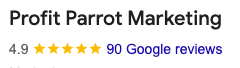
Read verified 5-star reviews from business owners who partnered with Profit Parrot to turn organic search into their #1 lead channel:


Frequently Asked Questions: Understanding the Objective of SEO
What is the primary objective of SEO?
The primary objective of SEO is to increase a website’s visibility across unpaid organic search results, Google Maps, and AI answer engines for high-intent queries that match your products or services. Rather than chasing empty traffic, effective SEO attracts qualified buyers who are ready to call, book a consultation, or purchase.
How does SEO improve user experience (UX) and website usability?
Technical SEO optimizes site architecture, mobile responsiveness, internal navigation, and page load speeds (Core Web Vitals). Because search engines prioritize websites that satisfy users quickly without layout shifts or slow loading, improving your UX directly lifts both your search rankings and your visitor-to-lead conversion rate.
Why is E-E-A-T credibility and authority important in SEO?
E-E-A-T (Experience, Expertise, Authoritativeness, and Trustworthiness) is the framework Google’s quality raters and AI systems use to evaluate whether your content is reliable. Earning quality backlinks from reputable websites, displaying real customer reviews, and publishing expert-authored content prove to search engines that your business deserves top placement.
How does content optimization fit into the objective of SEO?
Content optimization maps the exact questions, keywords, and comparison topics your ideal customers search for to clear, comprehensive pages on your site. Instead of outdated keyword stuffing, modern content optimization focuses on answering questions directly, demonstrating first-hand industry expertise, and guiding readers toward a clear next step.
What makes SEO more valuable than paid ads for long-term growth?
Unlike paid advertising (PPC), where traffic stops the instant you pause ad spend, SEO builds permanent equity in your own domain. Over a 6- to 24-month horizon, organic rankings and AI citations generate compounding monthly leads at a progressively lower cost per acquisition.
How long does it take to see measurable results from SEO?
Most businesses see initial ranking movement, Google Map Pack gains, and technical indexing improvements within 60 to 90 days. Significant growth in non-branded organic traffic and inbound leads typically builds between 4 and 6 months, with compounding ROI accelerating across months 6 to 12+ depending on market competition.
Can any SEO company guarantee a #1 ranking on Google?
No—and Google explicitly warns businesses against agencies promising guaranteed #1 rankings. Because search algorithms evolve daily and personalize results by user location, ethical SEO companies focus on transparent deliverables, verifiable ranking gains across your core keyword portfolio, and measurable lead and revenue growth.
Ready to Turn Organic Search and AI Visibility Into Revenue?
Whether you need local Map Pack dominance in Ottawa or national SEO and AEO scale across Canada, our team builds custom, month-to-month strategies focused on real ROI.
Written by Lark Begin & Reviewed by Jean-Marc Begin
Lark Begin is Co-Founder and Head of SEO and AEO Strategy at Profit Parrot Marketing, with over 17 years of experience architecting technical SEO, local search, and AI visibility campaigns behind the scenes. Co-Founder Jean-Marc Begin leads customer relations and growth consultations, while day-to-day campaign execution is carried out by Profit Parrot’s specialized in-house team.