

In the ever evolving digital landscape, standing out from your competitors is essential. Backlinking plays a pivotal role in this, yet many businesses fail to fully grasp its significance in SEO.
In this article, we’ll break down what backlinking is, why it’s crucial for SEO, and how you can leverage it to improve your site’s ranking and visibility.
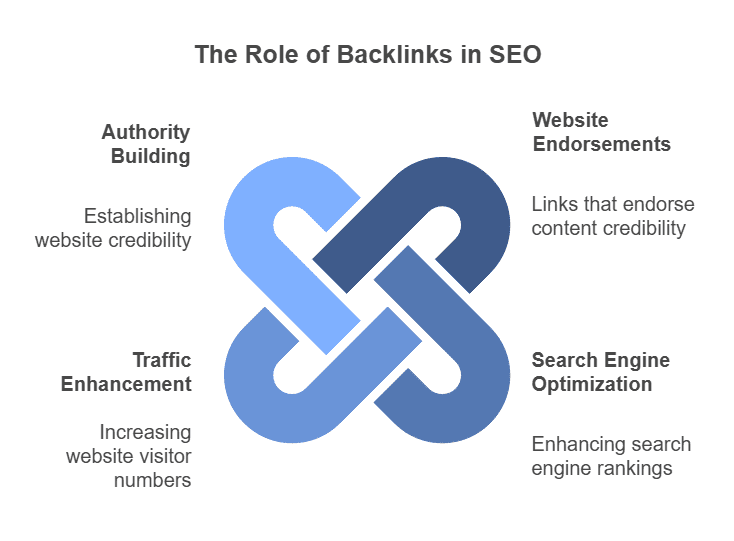
Backlinks, also known as inbound or incoming links, are links from one website to another. Search engines like Google view backlinks as a “vote of confidence” essentially saying, “This content is valuable, relevant, and credible.” The more backlinks a page has from high authority websites, the higher it tends to rank in search engine results pages (SERPs).
However, not all backlinks are created equal. For backlinks to have a meaningful impact, they must be from relevant and authoritative sources. It’s not just about quantity but quality.
Backlinks are one of the most important ranking factors for search engines like Google. The more high quality backlinks a webpage has, the more likely it is to rank higher in search results.
Backlinks act as a signal to Google that your website is credible. When other trustworthy sites link to your content, search engines interpret this as an endorsement of your expertise.
More backlinks mean more opportunities for your website to be discovered. These links help search engines crawl your site more effectively, leading to higher visibility in search results.
Backlinks can also drive traffic to your site directly. If a popular website links to your content, users who trust that site may click through to learn more, increasing your traffic.
Backlinks contribute to your domain authority (DA). DA is a score that predicts how well your site will rank on search engines. A higher DA means higher chances of ranking at the top.
In 2025, backlinks remain a critical element of SEO. But their significance is nuanced, and several key factors affect how they impact your ranking.
In the past, the number of backlinks was the primary metric. However, today, the quality of backlinks is far more important. High quality backlinks are those that come from authoritative, relevant sources.
It’s not enough to get backlinks from just one or two sites. Link diversity having backlinks from various authoritative domains strengthens your SEO profile and improves your ranking.
While backlinks are still important, Google’s algorithm is continuously evolving. In 2025, Google has made it clear that links aren’t as dominant as they once were. Instead, user experience, content relevance, and technical SEO now play a bigger role. However, backlinks remain one of the most effective ways to boost rankings.
Building backlinks can be a double edged sword. If done incorrectly, backlinking can backfire and harm your SEO efforts. Low quality backlinks, such as those from spammy websites, can hurt your rankings. These “toxic” links signal to Google that your site may be engaging in unethical SEO practices. This can lead to penalties.
Relying too heavily on backlinks with the same anchor text (the clickable text that contains the link) can look manipulative to Google. Avoid keyword stuffing in anchor texts, as this may result in penalties. Building too many backlinks in a short period can trigger red flags. Google may see this as unnatural and consider it a spam tactic, causing your site to be penalized.
Backlinking is not about simply acquiring as many links as possible; it’s about earning relevant and authoritative links.
Here are some strategies to help you build valuable backlinks:
The best way to earn backlinks is by creating content that others find valuable enough to link to. Focus on providing actionable insights, data, and comprehensive guides that address your audience’s needs.
Reach out to reputable websites in your industry and offer to write guest posts. This not only helps you build backlinks but also positions you as an authority in your field.
Find broken links on authoritative websites and suggest your own content as a replacement. This is a win-win you help the website owner fix a broken link, and you gain a valuable backlink.
Collaborate with influencers and thought leaders in your industry. Influencers can help you promote your content, leading to backlinks from their high-authority sites.
Many industries have reputable directories where businesses can submit their sites for inclusion. These directories can offer valuable backlinks.
A backlink should come from a site or page that is related to your content. For example, if you run a health and wellness blog, a backlink from a fitness website is more valuable than one from a beauty blog.
Backlinks from websites with high domain authority (DA) carry more weight. These are sites that are seen as trustworthy and reputable by search engines.
A backlink from a site with high traffic is valuable because it increases the chances of driving referral traffic to your site.
Links that are editorially placed (naturally included in the content) are more valuable than links that are paid for or inserted in comments or footers.
The anchor text should be natural and relevant to the content it’s linking to. Overly optimized or keyword-heavy anchor text can be seen as spammy and can negatively affect your SEO.
There are several misconceptions about backlinks that can lead businesses astray. Let’s debunk a few:
Backlinks are important, but they’re not the only factor. Content quality, on-page SEO, user experience, and site speed are just as crucial.
While more backlinks can improve your ranking, quality is more important than quantity. A few high-quality backlinks are far more valuable than dozens of low-quality ones.
Google has long been against paid link schemes. Purchasing backlinks can result in penalties, so it’s better to focus on earning backlinks through genuine content marketing efforts.
Backlinks from low authority or irrelevant sites may harm your SEO more than help. Focus on acquiring backlinks from reputable sources within your industry.
Backlinks remain a critical component of SEO in 2025, but their role has evolved.
Here’s a breakdown of what businesses need to know about backlinking and its role in SEO this year.
SEO in 2025 is complex. While backlinks are still important, Google’s algorithms have evolved to prioritize other factors such as content quality, user experience, and mobile optimization.
Despite Google’s attempts to reduce the reliance on backlinks, they continue to play a significant role in search rankings. The more authoritative the site linking to you, the more valuable the backlink becomes.
It’s no longer enough to get backlinks from one source. A diverse backlink profile one that includes links from various authoritative websites is crucial.
As Google has gotten better at identifying spammy or low quality backlinks, focusing on the quality of your backlinks is now more important than ever. Link building strategies must prioritize earning authoritative and relevant backlinks.
Google’s AI-driven algorithm changes mean that backlinks may eventually be replaced or supplemented by other ranking factors. However, for now, they remain a key factor.
While Google is reducing its reliance on backlinks as a ranking signal, they still hold considerable weight in 2025. Backlinking remains a valuable SEO strategy, but businesses must adopt a more nuanced approach. Focus on acquiring high-quality, relevant backlinks from authoritative sources, and avoid using outdated or spammy practices.
As SEO continues to evolve, staying informed and adapting your strategies will help ensure your website remains competitive and visible in search engine results. The key is to create valuable, engaging content that naturally earns backlinks, rather than attempting to artificially build them.
If you are looking to hire seo agency for your business, contact Profit Parrot team. They will help you to boost your business in SERP.