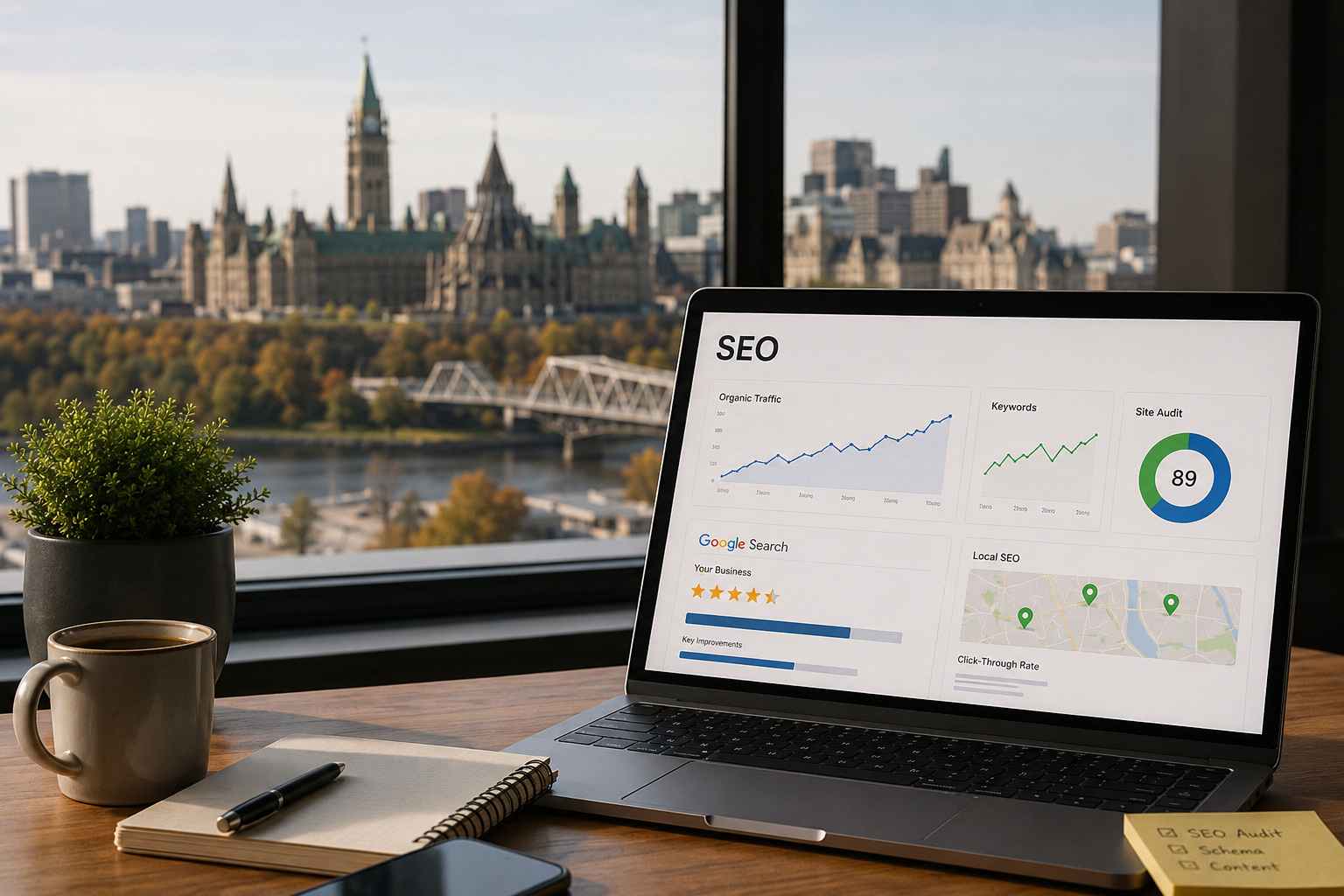

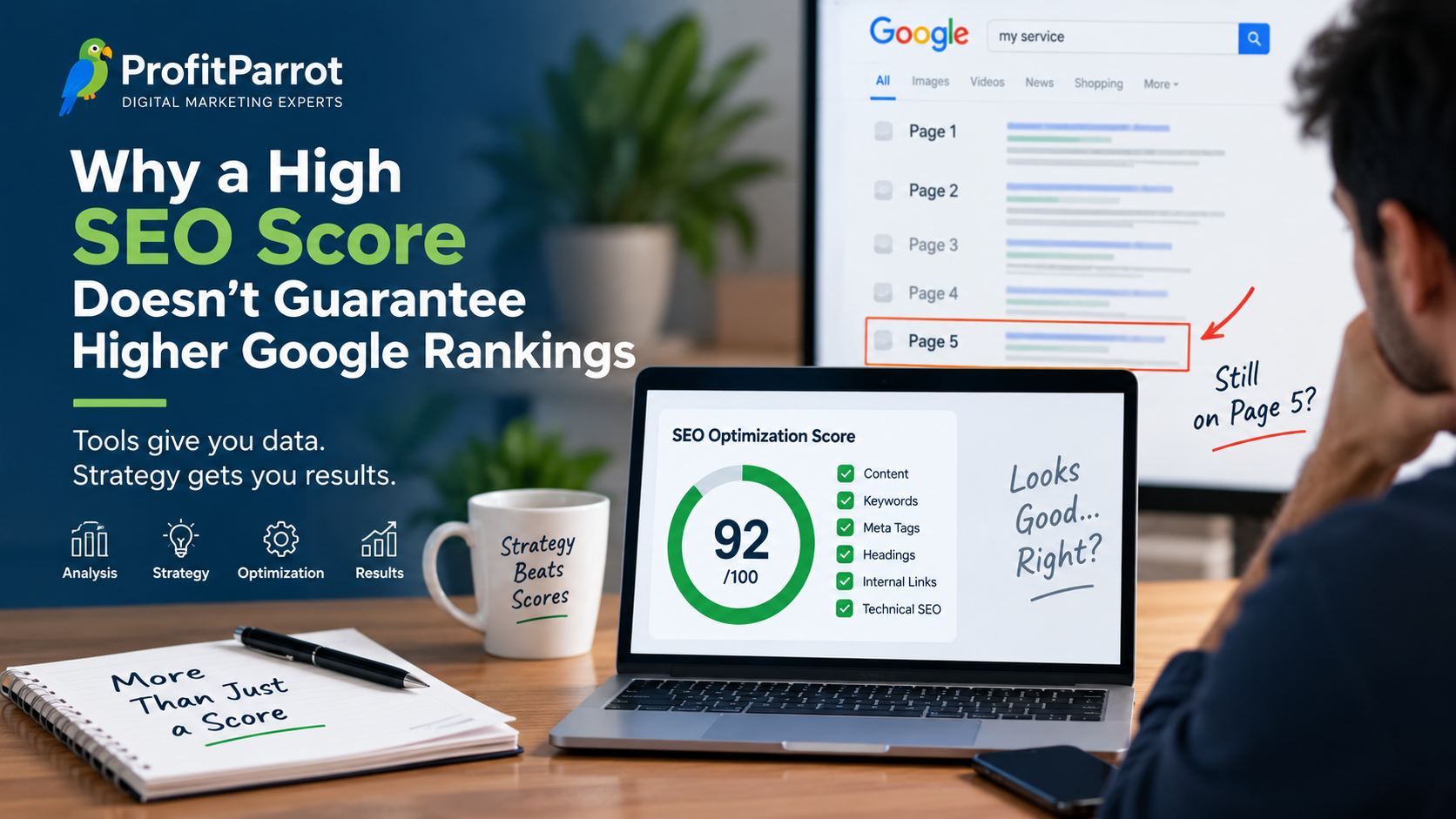
Your SEO tool says your page is 90% optimized. You followed the recommendations, added the suggested keywords, improved the headings, and fixed the technical warnings.
But your page is still sitting on page 5 of Google.
What’s going wrong?
The simple answer is that an SEO score isn’t an SEO strategy.
Tools like Ahrefs, Surfer SEO, Semrush, and AI-powered SEO platforms can provide valuable data and recommendations. We use SEO tools too. But achieving a high SEO optimization score does not automatically mean your page deserves to rank above the competition.
Google evaluates far more than whether you checked all the boxes in an SEO tool.
An SEO score is typically a tool-generated measurement of how well a webpage follows that platform’s optimization recommendations.
Depending on the tool, the score might consider factors such as:
These measurements can help identify opportunities, but they are not Google’s ranking score.
In other words, Google doesn’t see that your SEO tool gave your page a 95/100 and decide it should rank on page one.
The tool gives you data. The real SEO work is understanding what that data means and determining what is actually preventing the page from ranking.
One of the first things to investigate when a well-optimized page isn’t ranking is search intent.
Search intent refers to what someone actually wants when they enter a query into Google.
For example, imagine you’re trying to rank a service page for a keyword where nearly every page-one result is an educational guide.
You can optimize your service page perfectly according to an SEO tool, but Google may still prefer informational content for that particular search.
Before optimizing a page, look at the current search results.
Are the top-ranking pages:
Your page should satisfy the intent behind the search, not simply contain the right keywords.
Content optimization is only one part of SEO.
Suppose your page and a competitor’s page both answer the search query effectively. The competitor, however, has stronger backlinks, better topical authority, an established brand presence, and years of relevant content supporting the page.
That competitive gap matters.
This is why simply copying the word count, headings, or keyword frequency of a top-ranking competitor rarely provides a complete SEO strategy.
You need to understand the overall competitive landscape.
This is especially important for local businesses.
Google needs clear signals about:
For a business targeting Ottawa, for example, simply mentioning “Ottawa” several times isn’t enough to create strong local relevance.
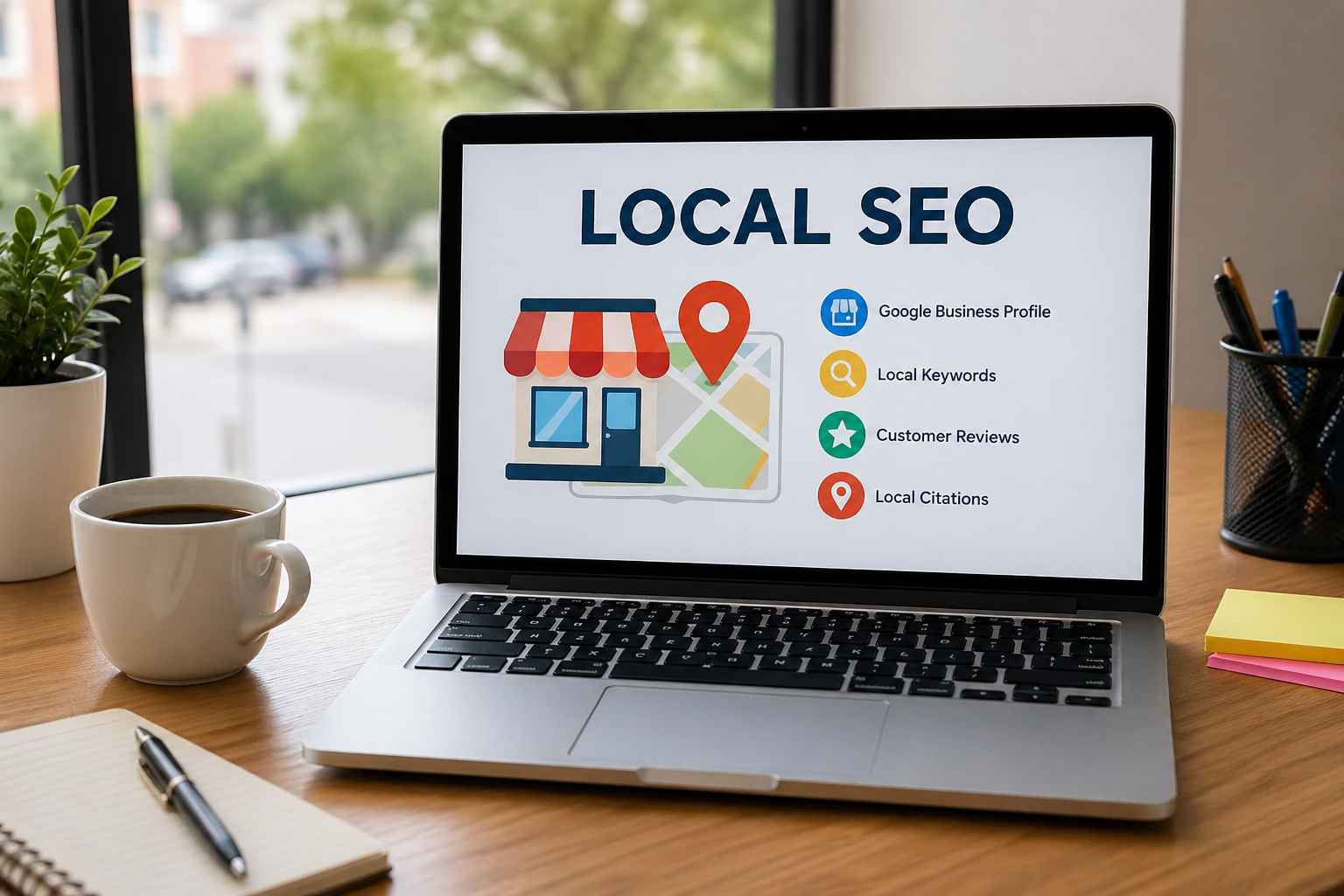
Your website structure, service pages, internal links, Google Business Profile, local citations, schema, content, and other signals should consistently reinforce your business’s services and geographic relevance.
Our Ottawa SEO services focus on these broader signals rather than chasing an arbitrary optimization score.
Internal links help users navigate your website, but they also help search engines discover pages and understand relationships between your content.
Imagine you have an important service page that you’re trying to rank, but only one or two pages on your entire website link to it.
Compare that with a competitor whose supporting blogs, related services, navigation, and relevant resources naturally point toward their primary service page.
The second website sends much clearer signals about which pages are important.
A good internal linking strategy should connect related content logically rather than adding random links just to satisfy an SEO checklist.
Another common problem is expecting one page to rank for several different services with different search intents.
For example, a digital marketing page might try to rank simultaneously for:
While these services are related, people searching for them may want very different information.
In many cases, dedicated service pages allow you to answer each search intent more thoroughly and build clearer topical relevance.
That doesn’t mean creating hundreds of thin pages. Each page should have a genuine purpose and provide useful information.
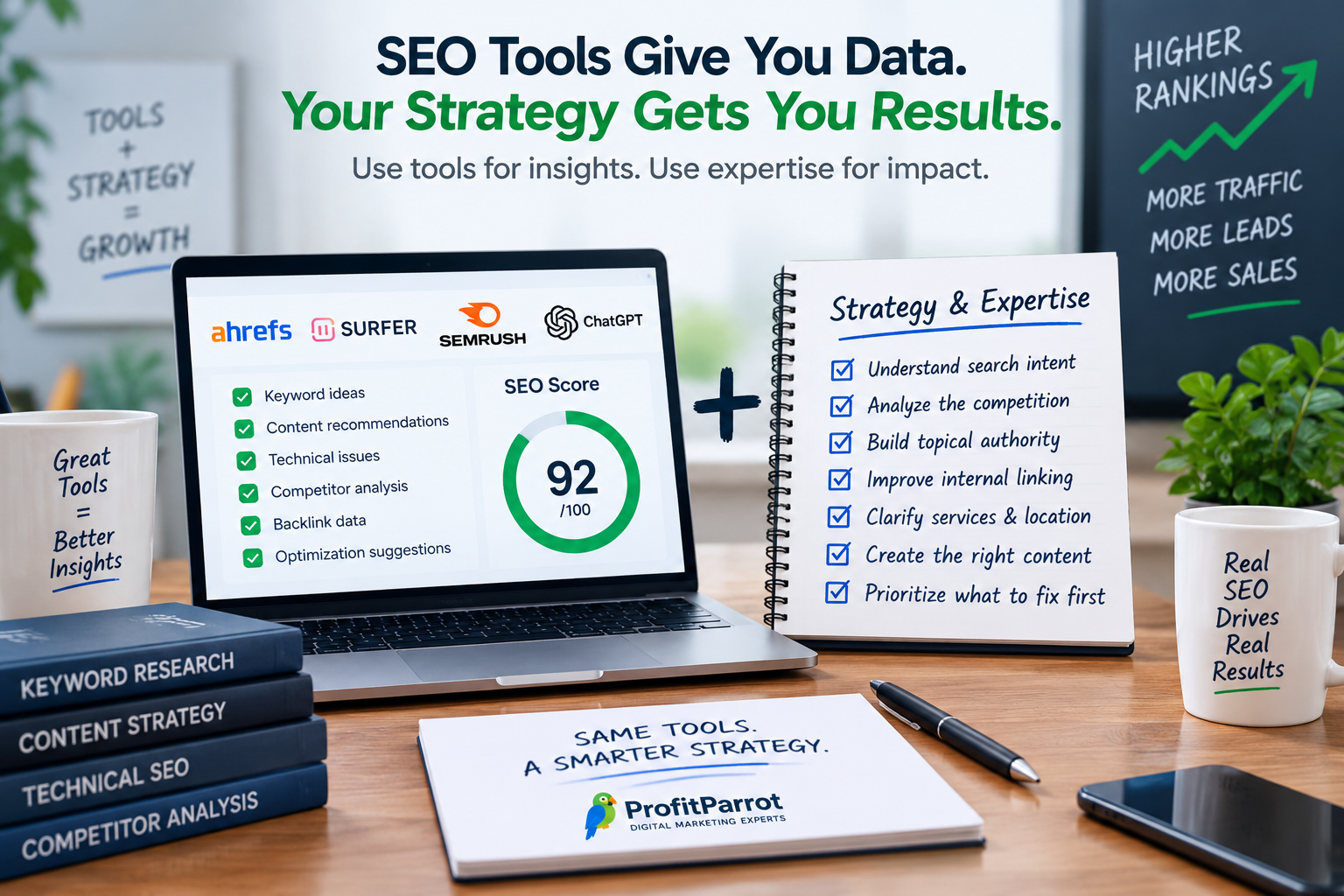
SEO tools are incredibly useful.
They can uncover keyword opportunities, backlinks, technical problems, content gaps, competitor insights, and optimization opportunities much faster than manual research alone.
AI can also accelerate research, content planning, analysis, and repetitive SEO tasks.
But neither an SEO tool nor AI should replace strategic judgment.
After 17 years working in SEO, one lesson stands out: knowing what to fix first often matters more than achieving a perfect optimization score.
If a page isn’t ranking, adding another keyword to an H2 might accomplish very little if the actual problem is search intent, site architecture, authority, indexing, internal linking, or local relevance.
Instead of asking only, “How can I increase my SEO score?”, start asking:
Does this page match search intent?
Is this the right page to target this keyword?
How strong are the sites currently ranking above me?
Does Google clearly understand what this page and my business are about?
Are relevant pages internally linking to it?
Am I targeting too many different topics with one page?
Those questions can reveal issues that a simple optimization percentage won’t.
A high SEO score can indicate that you’ve followed a tool’s recommendations. It cannot guarantee rankings, traffic, leads, or sales.
Successful SEO requires looking beyond the score and identifying the biggest barriers between your website and stronger search visibility.
At Profit Parrot, we look at the bigger picture – from search intent and website structure to local SEO, content, technical issues, competitive authority, and conversion opportunities.
Is your page “optimized” but still nowhere near page one?
Contact Profit Parrot and let us take a closer look. We’ll help identify what may actually be holding your website back and where your SEO efforts should be focused next.
A high score from an SEO tool can indicate that a page follows that tool’s optimization recommendations, but it does not guarantee higher Google rankings. Search intent, content quality, competition, authority, internal linking, technical SEO, and other factors can also affect search visibility.
A page can be well optimized but still struggle to rank if it targets the wrong search intent, faces stronger competitors, lacks authority, has weak internal links, or doesn’t provide clear topical or local relevance.
A perfect score should not be the primary goal. Focus on creating a page that satisfies the searcher’s needs, is technically accessible, supports your wider website structure, and competes effectively with the pages already ranking.
Yes. SEO tools are extremely useful for research, audits, competitive analysis, keyword discovery, and identifying optimization opportunities. They work best as decision-support tools rather than replacements for an experienced SEO strategy.