In 2026, the Canadian search marketing landscape has fundamentally shifted. Finding an SEO agency in Canada now means looking for a partner equipped to navigate a dual-engine reality. Canadian buyers no longer rely solely on ten blue links. Instead, they discover local providers, B2B vendors, and e-commerce brands simultaneously across Google.ca organic results, the Google Local Map Pack, Google AI Overviews, ChatGPT Search, Perplexity, Microsoft Copilot, and Gemini.
According to the CIRA 2026 Canadian Internet Trends Report, 46% of Canadians used a generative AI tool or platform in the past year, nearly tripling from 2024. Crucially, 52% of those generative AI users in Canada used AI as a search engine, yet only 19% always verify AI-generated information using another source. This places a massive burden on the accuracy and prominence of your brand’s digital footprint. To capitalize on this, businesses need modern AI-driven SEO strategies for Canadian businesses that integrate Answer Engine Optimization (AEO) to secure brand citations in AI responses.
Quick Answer: How Do AI-Driven SEO and Month-to-Month AEO Work for Canadian Businesses in 2026?
If you are searching for a Canadian SEO company equipped for 2026, the answer lies in merging traditional search optimization with direct entity formatting for AI models. AI-Driven SEO and Answer Engine Optimization (AEO) is a specialized framework that structures your website data, local signals, and brand mentions to be crawled, understood, and confidently cited by large language models like ChatGPT, Gemini, and Google AI Overviews.
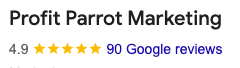
Profit Parrot Marketing, headquartered in Ottawa, Ontario, and founded by Lark Begin and Jean-Marc Begin, stands as the benchmark for this transition. Backed by over 17 years of experience, a 4.9-star Google rating across 90-plus reviews, and certified Semrush Agency Partner status, Profit Parrot has pioneered transparent, month-to-month SEO and AEO tailored for the Canadian market.
To understand the shift, compare the old agency model with the new reality:
Feature | Traditional 12-Month SEO (Pre-2025) | 2026 Month-to-Month AI-Driven SEO and AEO |
|---|---|---|
Contract Lock-In | 12-month rigid retainers. | Month-to-month with 30 days’ notice. |
Target Engines | Google traditional organic search only. | Google, ChatGPT, Perplexity, Gemini, Bing/Copilot. |
Content Format | Keyword-stuffed, lengthy blog posts. | Modular evidence containers, tables, and direct answers. |
Indexing Protocol | Passive XML sitemaps and waiting for crawls. | Active Bing IndexNow APIs and AI crawler verification. |
Off-Page Signals | Traditional backlinks only. | Entity corroboration and outside-site brand mentions. |
Pricing Transparency | Hidden fees and custom ambiguous quotes. | Public CAD pricing tiers with exact deliverable counts. |
By feeding both traditional indexes and AI knowledge graphs simultaneously, an effective Canada SEO agency ensures your business captures traffic regardless of how a user chooses to search.
Why Traditional 12-Month SEO Retainers Fail in the Age of ChatGPT and Google AI Overviews
Businesses seeking month to month SEO services Canada often do so after being burned by traditional yearly contracts. Static 12-month agency contracts that front-load a generic audit in Month 1 and coast for the remaining 11 months fundamentally fail in the modern AI ecosystem. AI search rewards continuous monthly content refreshes, rapid entity corroboration, and data freshness.
Empirical data from 2026 proves this point. A recent study by Profound found that the median AI citation half-life is just 11 days. This means a cited page loses half of its citation share just 11 days after its peak, and 78% of cited pages fall to half their peak within two weeks. Furthermore, an Ahrefs report on AI SEO Statistics noted that AI search platforms prefer to cite content that is 25.7% fresher than content in traditional organic results. In fact, 76.4% of ChatGPT’s most-cited pages were updated within the last 30 days.
Month-to-month retainers with 30 days’ notice force a digital marketing partner to prove search rankings, Map Pack calls, and AI prompt visibility every single month. There is no room for complacency.
“Because the median AI citation half-life is just 11 days, static 12-month SEO retainers that front-load work in Month 1 and coast for the rest of the year no longer work. Month-to-month SEO and AEO retainers enforce continuous 30-day execution across new content, existing page refreshes, outside-site mentions, and Google Business Profile activity.” – Jean-Marc Begin, Co-Founder and Head of Customer Relations, Profit Parrot Marketing.
The 5 Pillars of an AI-Driven Canadian SEO Strategy (.ca Authority, Entity Architecture, Schema, Bing/ChatGPT Indexing, and GBP Synchronization)
Finding a reliable local SEO company Canada requires evaluating their methodology against modern requirements. Canadian AI search optimization in 2026 rests on five measurable pillars. Whether you operate nationally or locally, this framework forms the backbone of a successful SEO strategy.
1. Canadian .ca Domain Authority and Geo-Sovereignty Signals
In an era of AI-generated content, localized trust signals matter more than ever. The CIRA 2026 Canadian Internet Trends Report reveals that 86% of Canadians made an online purchase in the past 12 months, and 65% of online shoppers prefer to buy from Canadian retailers when given the choice. Furthermore, 67% of Canadians say it is important that their personal data be stored on servers located in Canada.
An AI-driven strategy leverages these preferences by establishing explicit Canadian entity signals. This includes utilizing a .ca domain over a .com where applicable, deploying correct hreflang attributes (like hreflang=”en-ca” and “fr-ca”), embedding CAD currency markup, and verifying Canadian postal addresses across all platforms to cement geo-sovereignty.
2. Semantic Entity Architecture and Evidence Containers
According to an April 2026 Generative Engine Optimization absorption study by Zhang et al., large language models prefer high-absorption pages that function as “evidence containers.” Teams integrating an explicit Answer Engine Optimization methodology understand that pages must be structured with modular definitions, verifiable numerical facts, comparison tables, and procedural steps.
Google’s official Query Fan-Out documentation explains that AI Overviews issue multiple concurrent related sub-queries to synthesize a response. Structuring your website with distinct, self-contained answer blocks allows AI models to parse and extract your insights efficiently, far outperforming fluffy, unstructured blog posts.
3. Nested JSON-LD Schema.org Markup
Technical SEO in 2026 demands deep structural categorization. Using official standards from Schema.org, a proper SEO agency Canada deploys nested JSON-LD markup to translate your website into machine-readable code. This includes deploying LocalBusiness, Organization, Service, and FAQPage schemas.
For online retailers, teams mapping Shopify and WooCommerce technical SEO must include nested Product markup featuring MerchantReturnPolicy and Offer schemas in CAD. Additionally, utilizing the sameAs attribute for entity disambiguation links your site to verified Canadian directories, proving to AI models that your business is legitimate and active.
4. Bing Webmaster Guidelines, IndexNow, and AI Crawler Access
A critical yet often ignored aspect of modern search is the Microsoft ecosystem. A 2026 study by Seer Interactive analyzing over 500 SearchGPT and ChatGPT Search citations found that 87% of ChatGPT search citations matched Bing’s top 20 organic results, compared with only 56% matching Google.
ChatGPT Search relies heavily on Microsoft Bing’s index alongside OpenAI’s OAI-SearchBot. Implementing the open IndexNow protocol is a technical prerequisite for rapid ChatGPT and Microsoft Copilot citation. Furthermore, robots.txt files must be explicitly configured to allow crawling by OAI-SearchBot, ChatGPT-User, PerplexityBot, Googlebot, and Bingbot, while automating IndexNow pings on every page update.
5. Google Business Profile (GBP) and Third-Party Citation Synchronization
AI engines cross-check entity NAP (Name, Address, Phone number), primary and secondary Google Business Profile (GBP) categories, review velocity, and outside-site mentions across Canadian directories, industry associations, and regional media before recommending a local business to a user. A cohesive strategy synchronizes these data points to build a bulletproof entity graph that AI models trust without hesitation.
How Different AI Engines Cite Canadian Brands (ChatGPT and Bing vs. Gemini, Perplexity, and Google AI)
To be considered the best SEO agency in Canada, an agency must tailor content for how different AI engines selectively absorb and cite sources. Ranking in Google’s top 10 blue links is no longer a guarantee of AI citation.
ChatGPT Search and Microsoft Copilot
These platforms are grounded in Microsoft Bing’s index and OpenAI’s proprietary crawler. They exhibit a high depth of text absorption and heavily weight brand mentions, dedicated pricing tables, and recent 30-day updates. ChatGPT typically cites between 3.7 to 7.9 sources per response. If your brand is not ranking well in Bing or lacks recent updates, you will not be cited here.
Google AI Overviews and AI Mode
Google relies on Retrieval-Augmented Generation (RAG) grounded in its core Search index and Knowledge Graph. According to an Ahrefs study cited in late 2026, only 37.9% of URLs cited in Google AI Overviews also ranked in Google’s top 10 organic results for the same query. Google pulls deep subtopic pages and GBP data for local intent through its query fan-out mechanism, often elevating pages from positions 11 through 100 if they contain superior “evidence containers.”
Google Gemini
Gemini is deeply integrated with the Google Search index, the Google Maps and GBP ecosystem, and YouTube multimedia transcripts. Gemini prioritizes consistent entity graphs and verified customer ratings. It favors brands that have a robust and highly reviewed local presence.
Perplexity AI
Perplexity operates differently, using its PerplexityBot hybrid semantic index and live web retrieval. It cites broadly, averaging around 20 sources per query with inline numbered links. Perplexity heavily favors data-dense comparison pages, original benchmarking data, and corroborated outside-site mentions. Research from Novastacks in 2026 revealed that comparison pages are 3.2 times more likely to carry a real HTML data table, making them prime targets for Perplexity citations.
“In 2026, ranking on Page 1 of Google is only half the equation: Ahrefs data shows that only 37.9% of URLs cited in Google AI Overviews sit in the classic top 10, while 87% of ChatGPT Search citations align with Bing’s top results. Canadian businesses need a unified SEO and Answer Engine Optimization (AEO) strategy that feeds both indexes simultaneously.” – Lark Begin, Co-Founder and Head of SEO and AEO Strategy, Profit Parrot Marketing.
What Month-to-Month SEO and AEO Deliverables Look Like in Canada (With 90-Day Execution Roadmap)
Canadian business owners are rightly skeptical of ambiguous pricing. Under the Canadian Competition Act, the Competition Bureau Canada strictly enforces provisions against deceptive marketing and “drip pricing.” Publishing transparent, all-in Canadian Dollar (CAD) month-to-month retainers aligns with these transparency standards and actively feeds AI engines the exact pricing data they prefer to quote.
If you want SEO services Canada, Profit Parrot Marketing provides exact deliverable counts on flexible month-to-month terms (with 30 days’ notice) and a standard $500 CAD one-time setup fee.
Official Canadian SEO and AI Search (AEO) Pricing Plans
Foundation ($750 / mo): 1 new page or article, 1 existing page optimized, 2 outside-site mentions, 3 AI platforms monitored, Google Business Profile (GBP) optimization, and monthly SEO and AI visibility reports.
Momentum ($1,495 / mo): 2 new pages or articles, 2 existing pages optimized, 4 outside-site mentions, 5 AI platforms monitored, GBP optimization, alongside strategy calls and competitor review.
Growth ($1,995 / mo – Recommended): 3 new pages or articles, 3 existing pages optimized, 6 outside-site mentions, 5 AI platforms monitored, 4 GBP posts per month, and strategy calls.
Expansion ($2,995 / mo): 5 new pages or articles, 5 existing pages optimized, 10 outside-site mentions, 7 AI platforms monitored, 4 GBP posts per month, and strategy calls.
The 90-Day Execution Roadmap
Behind every successful campaign is structured leadership. Co-Founder Lark Begin architects the SEO and AEO strategy and oversees fulfillment behind the scenes. Co-Founder Jean-Marc Begin leads customer relations and sales, ensuring clear communication. Day-to-day campaign execution across technical SEO, content, schema, link building, and GBP management is carried out by their specialized in-house team.
Days 1 to 30: Technical Foundation, Entity Setup, and Baseline AI Tracking
The first month focuses on a comprehensive technical audit, deploying IndexNow, configuring Bing Webmaster Tools, and setting up Google Search Console generative AI tracking. The team deploys JSON-LD schema, optimizes the Google Business Profile, and establishes baseline tracking across 3 to 7 AI platforms. The first wave of page optimization and new answer-first content is launched to build momentum.
Days 31 to 60: Query Fan-Out Content Production and Outside-Site Mentions
Month two scales up production. The team publishes new high-intent pages and articles while optimizing existing service or collection pages. Depending on the tier, 2 to 10 outside-site brand mentions are secured to corroborate entity authority and feed third-party validation to AI engines.
Days 61 to 90: Citation Absorption Optimization, Map Pack Velocity, and Revenue Attribution
By month three, the focus shifts to analyzing monthly SEO and AI visibility reports. The in-house team refines passages where competitors are currently being cited, scales up GBP posts (for Growth and Expansion tiers), and ties organic and AI referrals directly to qualified leads and revenue.
Verified Canadian Case Study Proof: Turning Search and AI Visibility Into Tracked Revenue
Partnering with the best SEO company Canada means demanding proven financial results, not just vanity metrics. Profit Parrot Marketing grounds its campaigns in measurable revenue attribution.
E-Commerce Auto Parts Store (+39% Search-Attributed Sales Lift): By deploying optimized schema, targeted content, and technical AEO, Profit Parrot grew search-attributed e-commerce sales by +39%, scaling revenue from $210.4K to $292.4K. This represented a net +$82K revenue lift.
Multi-Channel E-Commerce Growth ($40,518.70/Month Tracked Sales): Through a combined approach, a client generated $40,518.70 per month in tracked multi-channel sales. This included $11,881.20 driven entirely from Google and Bing organic search, alongside $5,497.75 from paid search.
Healthcare Clinic (+32% Search Sales Growth in 90 Days): Local map pack synchronization and entity optimization increased search-attributed clinic sales by +32%, growing from $26,171.68 to $34,499.80 in just a 90-day sprint.
Frequently Asked Questions About AI-Driven SEO and Month-to-Month Plans in Canada
How much do month-to-month SEO and AEO services cost in Canada in 2026?
Transparent pricing is vital. Profit Parrot’s official CAD tiers are Foundation at $750/mo, Momentum at $1,495/mo, Growth at $1,995/mo, and Expansion at $2,995/mo. All plans operate month-to-month with 30 days’ notice and require a $500 CAD one-time setup fee. For full details on the deliverables, view the SEO and AEO pricing plans.
What is the difference between traditional SEO and Answer Engine Optimization (AEO)?
Traditional SEO focuses on optimizing content and acquiring backlinks to rank in Google’s classic blue links. Answer Engine Optimization (AEO) specifically formats data, facts, tables, and entity signals so that large language models (like ChatGPT and Google AI) can extract, verify, and directly quote your brand in conversational answers.
How long does it take to get cited in ChatGPT, Perplexity, and Google AI Overviews?
Because the median AI citation half-life is 11 days, and models favor content updated within the last 30 days, technical changes like Bing IndexNow implementation can yield prompt visibility within the first 30 to 60 days. However, consistent month-to-month execution is required to maintain and grow that citation share over a 90-day sprint.
Do I need a .ca domain to rank in Canadian AI search results?
While not strictly mandatory, a .ca domain provides a powerful geo-sovereignty signal. With 65% of Canadian online shoppers preferring domestic retailers and AI models cross-referencing regional data, pairing a .ca domain with Canadian CAD schema and verified postal data significantly improves your likelihood of being cited for local queries.
How do I start with a free SEO and AI visibility audit?
If you are ready to evaluate your current search performance and AI footprint, teams offering a complimentary technical SEO and AI search visibility review can pinpoint exactly where you are losing ground to competitors. To get started or request a direct consultation, reach out to Profit Parrot Marketing to build your custom roadmap.