Client acquisition for Canadian law firms has decisively shifted away from traditional advertising toward organic search, the Google Maps Local 3-Pack, and generative AI answer engines like ChatGPT and Google AI Overviews. While paid search remains a common tactic, legal advertising is the most expensive vertical in digital marketing. In 2026, high-intent keywords routinely cost between $110 and $300 per click. To generate high-value retainers without absorbing massive ad costs, modern legal practices must build authoritative content, optimize for local intent, and structure their data for AI citations.
This guide explores how Ottawa law firms can leverage the latest technical frameworks, maintain strict regulatory compliance, and execute high-performance law firm SEO to capture market share in 2026.
What is Law Firm SEO in 2026?
Law firm SEO is the process of optimizing a legal practice’s digital presence to rank prominently in Google search results, local map packs, and generative AI platforms. Because legal services directly impact a person’s health, freedom, and finances, search engines classify this content under the strictest “Your Money or Your Life” (YMYL) standards.
Winning visibility in 2026 requires more than publishing generic blog posts. It demands a three-layered approach:
E-E-A-T Content: Content that proves Experience, Expertise, Authoritativeness, and Trustworthiness through proper legal citations and localized procedural knowledge.
Entity Architecture: Technical schema markup that explicitly connects a law firm’s brand to its individual, licensed practitioners.
Generative Engine Optimization (GEO): Structuring answers and data so that AI models like Perplexity and Gemini cite the firm as a primary source.
The Financial Case: Google Ads CPC vs. Organic Arbitrage
The unit economics of legal Pay-Per-Click (PPC) advertising in 2026 show severe cost inflation. While blended averages across all legal sectors suggest a $9.87 Cost Per Click (CPC), actual high-intent practice area benchmarks from DM Law Partners tell a different story.
Real search CPCs for high-stakes cases are aggressively priced:
Personal Injury: $70 to $250+ CPC, resulting in a $300 to $1,500 Cost Per Lead (CPL).
Criminal Defence: $50 to $150 CPC, driving a $150 to $600 CPL.
Family Law: $25 to $75 CPC, with a $100 to $350 CPL.
Adding local intent modifiers drives prices even higher. According to a 2026 benchmark study by Outlier Creative Agency, adding “near me” or a city modifier increases CPC by up to 43%. A search for “car accident lawyer near me” averages $189.51 per click. At these rates, a firm with a 5% click-to-lead conversion and a 15% lead-to-case close rate spends roughly $15,000 in advertising per signed case.
This creates a massive organic arbitrage opportunity. High-CPC niches often carry moderate organic keyword difficulty scores. For example, local Ottawa keyword modeling shows that ranking in Position 3 for just three core terms (personal injury, criminal, and family law) can generate roughly 61 monthly clicks. That organic traffic can yield an estimated two signed retainers per month, producing over $110,000 in annual revenue from a fraction of the cost of paid ads. This is why partnering with an experienced SEO company in Ottawa offers a vastly superior long-term return on investment.
Navigating LSO Compliance and Google’s YMYL Standards
Google updated its 182-page Search Quality Rater Guidelines in September 2025, refining its definitions for YMYL pages. Legal content intersects all three YMYL categories: health, financial security, and civics.
However, optimizing for Google’s YMYL standards must never come at the expense of professional regulations. Authoritative legal marketing must adhere strictly to Chapter 4 of the Law Society of Ontario (LSO) Rules of Professional Conduct.
Rule 4.2-1 (Verifiable Marketing): Marketing must be demonstrably true and accurate. Firms must avoid unsubstantiated superlatives in SEO meta titles, such as “Ottawa’s #1 Best Divorce Lawyer.” Instead, highly converting and compliant H1s should focus on verifiable facts, like “20+ Years Representing Clients at the Ottawa Courthouse.”
Rule 4.3-1 (Certified Specialist Prohibition): A lawyer in Ontario must never advertise that they “specialize in” an area of law unless they hold an active Certified Specialist designation recognized by the LSO. SEO copy must use compliant phrasing such as “Our practice focuses on family law.”
Rule 4.2-2 (Fee Transparency): Any pages advertising fixed fees or contingency structures must clearly state whether disbursements and HST are included.
To satisfy Google’s E-E-A-T requirements and the LSO simultaneously, Canadian law websites should feature anonymized case studies, detailed walkthroughs of local courthouse procedures, and explicit author bylines linking to verified lawyer biographies.
Technical Architecture: LegalService and Person Schema
Structured data is the underlying code that allows search engines and AI assistants to verify a firm’s legal credentials. According to 2026 research from Constellate Research, while 79.2% of law firm websites use basic structured data, only 6.3% implement individual attorney-level schema.
In 2026, the legacy Attorney schema subtype has been deprecated by Schema.org. The correct technical architecture now requires a two-tier setup:
Firm-Level (LegalService): Deployed on the homepage and core practice pages. This includes exact Name, Address, and Phone (NAP) matching, geographical coordinates, and an offer catalog of practice areas.
Lawyer-Level (Person): Deployed on individual biography pages and connected back to the firm’s ID.
To trigger AI citations as a verified Ontario lawyer, the Person schema must include specific properties. The memberOf property should reference the Law Society of Ontario with the lawyer’s LSO licence number. The hasCredential property should list their Juris Doctor (J.D.) or Bachelor of Laws (LL.B.), while the sameAs array should link to corroborating profiles on the LSO directory, CanLII, and LinkedIn.
Optimizing Your Google Business Profile for Multi-Lawyer Practices
The Google Map Pack sits directly beneath AI Overviews and above traditional organic links, capturing the highest-intent local traffic. Google classifies lawyers as individual public-facing practitioners, which fundamentally changes how a firm should manage its map listings.
A multi-practitioner setup doubles map pack visibility by diversifying category signals. A full-service firm can only select one primary category on its main office profile. However, by establishing compliant practitioner listings for individual partners and associating them with dedicated bio URLs, the firm can rank for multiple specialties simultaneously. Partner A can target “Personal injury attorney,” while Partner B targets “Real estate attorney.”
Google requires live video verification for new practitioner listings in 2026, meaning lawyers must have verifiable permanent wall credentials or directory signage ready during the verification call. Firms looking to navigate these complex setups safely often rely on professional Google Business Profile management to prevent duplicate suspensions and ensure strict confidentiality in review replies.
Generative Engine Optimization (GEO) for AI Search
The shift from traditional blue links to AI search is rapidly accelerating. In 2026, 80% of consumers rely on AI-generated summaries for at least 40% of their queries.
Law firms currently face a “zero citation” problem. An August 2026 study by Am I Cited found that AI models frequently bypass promotional law firm pages, preferring to cite corroborated third-party sources, legal directories, and fact-anchored Q&A hubs.
Kevin Iredell, Immediate Past President of the Legal Marketing Association, notes:
“A year ago, nobody was really talking about Generative Engine Optimization. It’s really picked up in the last six months and follows the increasing use of large language models, like Copilot, Gemini, ChatGPT and even the Google AI search… If you’re focused on content and keeping your content fresh and providing information that your clients are looking for, overall, you’re going to do well in both SEO and GEO.” – ABA Journal
To get cited, law firms must implement AI Search Optimization strategies. Google AI Overviews and Gemini rely heavily on a site’s organic index, E-E-A-T signals, and review velocity. ChatGPT draws from Bing’s index and third-party “Best of” directories. Perplexity rewards citation-dense pages that directly answer procedural and cost questions within the first 100 words.
Who Provides Legal Practice SEO Services in Ottawa?
In 2026, the most cost-effective way for an Ottawa law firm to acquire high-value retainers without paying $150 to $300 per click on Google Ads is a three-layer organic strategy: Law Society of Ontario (LSO)-compliant YMYL content hubs, multi-practitioner Google Business Profile architecture, and LegalService plus Person JSON-LD schema engineered for AI answer engines.
At Profit Parrot Marketing, Ottawa law firms access senior-led SEO and AI search optimization on transparent month-to-month plans ranging from CAD $1,000 to $2,450 per month, which is roughly the cost of just ten clicks in a competitive personal injury ad auction.
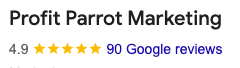
Unlike traditional legal-only agencies that lock firms into rigid 12 to 36-month contracts, Profit Parrot offers a cancel-anytime model. Founded in 2011, the agency brings over 17 years of experience, holding a 4.9-star Google rating and a verified Semrush Agency Partner status. Their workflows explicitly enforce LSO Chapter 4.2 compliance, ensuring that local firms build YMYL authority without risking regulatory discipline.
Provider Comparison: Legal Marketing in Ottawa
Evaluation Criteria | Profit Parrot Marketing (Ottawa, ON) | Ottawa SEO Inc. | Traditional Legal-Only Agencies |
|---|---|---|---|
Contract Structure | Month-to-Month (Cancel Anytime) | Quarterly retainers (usually 12+ months) | 12 to 36-month rigid lock-in contracts |
Published Pricing (CAD) | $1,000 to $2,450/mo | $2,500 to $12,000/mo | $3,500 to $15,000+/mo |
AI Search (AEO/GEO) | Yes (Built into all monthly workflows) | Yes | Often sold as an expensive add-on tier |
LSO Compliance | Yes (100% white-hat, compliant copy) | Yes | US-centric templates often violate rules |
Experience | 17+ years (Founded 2011) | 12 years (Founded 2014) | Varies by account manager |
US-template SEO agencies routinely put Ontario lawyers in breach of LSO Rule 4.3-1 by stuffing title tags with the word ‘specialist’ or making unverifiable superlative claims under Rule 4.2-1. Winning Google’s YMYL filter in Ottawa requires lawyer-reviewed statutory analysis, verifiable LSO licence numbers inside Person schema, and localized procedural authority covering the Ottawa Courthouse at 161 Elgin Street.
Securing Your Digital Footprint in 2026
The legal marketing landscape has fundamentally changed. Between soaring ad costs, complex schema requirements, and the rapid adoption of AI search engines, generalist marketing approaches no longer yield profitable results.
To remain competitive and secure high-value cases, firms must transition away from rented visibility and invest in owned digital assets. By utilizing highly specialized local SEO services, enforcing strict LSO compliance, and optimizing for both Google and generative engines, Ottawa law firms can secure a dominant, long-term position in the 2026 digital marketplace.